
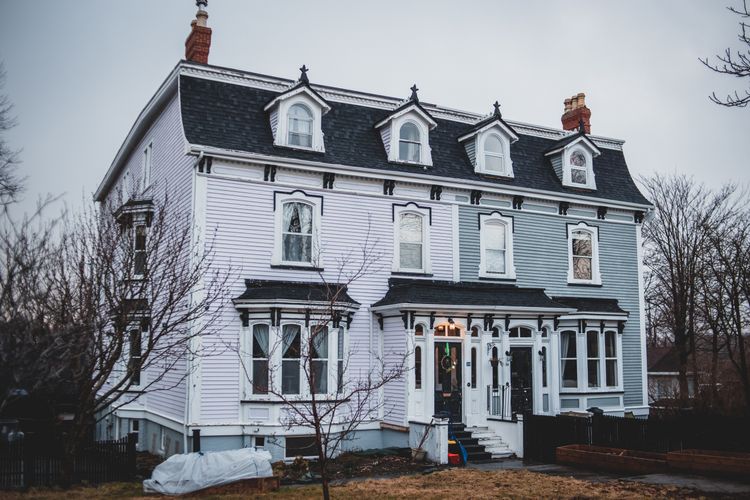
London is a city of older buildings. Victorian terraces, Edwardian semis, 1930s suburban houses and converted period flats all make up a substantial proportion of the properties that change hands every year. If you’re buying one of them, you need a survey. The question most buyers ask is: which one?
The honest answer is that it depends on the specific property, not the era it was built in. A Level 2 survey is appropriate for some older properties. A Level 3 Building Survey is the right choice for others. The distinction matters, and getting it wrong — commissioning a Level 2 on a property that warrants a Level 3 — can leave you with a report that doesn’t give you the depth of information the building actually requires.
Somerset & Sinclair carries out RICS Level 2 surveys and Level 3 Building Surveys across Greater London and the Home Counties. This guide sets out how to think about survey choice for older properties, what a Level 2 can and can’t tell you about a Victorian or period home, and the situations where a Level 3 is genuinely the better call.
What Makes Older Properties Different?
Properties built before the mid-twentieth century were constructed using materials and methods that differ significantly from modern building practice. Solid brick walls rather than cavity construction. Lime mortar rather than cement. Timber ground floors rather than concrete slabs. Original single-glazed sash windows. These aren’t automatically problems, but they do behave differently, age differently, and fail differently to modern construction.
London’s Victorian and Edwardian housing stock also carries specific risks related to the city’s geography. Large areas of London are underlain by London clay, a soil type that shrinks significantly in dry summers and expands in wet weather. This places cyclic stress on the shallow foundations common in nineteenth-century terraced housing, and properties near mature trees or in areas with a history of leaking drains carry an elevated subsidence risk as a result.
On top of the original construction, most older London properties have been modified over decades. Extensions, loft conversions, internal wall removals, reroofing, replumbing, rewiring. Some of this work was carried out to modern standards. Some of it wasn’t. A survey of an older property isn’t just an assessment of how well it was built. It’s an assessment of what’s been done to it since.
Can a Level 2 Survey Work for an Older Property?
Yes, in the right circumstances. A RICS Level 2 survey is a thorough, professional assessment of all accessible and visible elements of a property. For a conventionally built older property in reasonable condition — a well-maintained 1930s semi, a late Victorian terrace with no obvious signs of significant defects, a purpose-built Edwardian flat in a managed block — it can provide exactly the information a buyer needs.
The key phrase is reasonable condition. A Level 2 survey is designed for properties where a thorough visual inspection of accessible elements gives you a reliable picture of the overall condition. Where the property has significant visible defects, shows signs of structural movement or active damp, has non-standard construction elements, or has been substantially altered, the Level 2’s scope begins to fall short of what the property actually needs.
When a Level 2 Survey Is Appropriate for an Older Property
A Level 2 survey is generally suitable for older properties when:
-
- The property is of conventional brick-built construction with no obvious signs of structural movement
-
- There are no visible signs of significant or active damp
-
- The property has not been substantially extended or structurally altered
-
- The buyer has no specific concerns arising from viewings
- The property dates from the late Victorian period or later and appears to be in sound condition
When a Level 3 Building Survey Is the Better Choice
There are situations where a Level 2 survey, however thoroughly conducted, does not give a buyer of an older property the depth of analysis they need. These are not edge cases. They apply to a significant proportion of the older properties that come to market in London.
Pre-1900 Properties and Early Victorian Stock
The oldest housing stock in London, particularly properties built before 1880, tends to carry the greatest structural complexity and the highest probability of significant defects. Solid wall construction of this age may show moisture penetration patterns that require detailed analysis rather than a condition rating. Roof structures may have been partially or wholly replaced using non-matching materials. Chimney stacks of this vintage frequently show structural movement independent of the main building. A Level 3 Building Survey, with its greater technical depth and tailored analysis of construction methods, is almost always the more appropriate choice.
Properties With Visible Signs of Defects
If a viewing has given you any reason for concern, that concern should inform your survey choice. Diagonal cracks above door and window openings, sticking doors and windows, sloping floors, damp staining, or recently applied render that might be concealing something behind it are all indicators that a Level 3 survey is warranted. A Level 2 will identify and rate these findings, but a Level 3 will go further in analysing probable causes and what remediation is likely to involve.
Substantially Extended or Altered Properties
Many older London properties have been extended at the rear, converted in the roof, or had internal walls removed to create open-plan layouts. The quality of this work varies considerably. Extensions may have been built without adequate foundations. Loft conversions may have compromised the original roof structure. Wall removals may not have been supported correctly. A Level 3 Building Survey assesses the structural implications of these alterations in a way that a Level 2 cannot fully replicate.
Non-Standard Construction
Some older properties in London were built using materials or methods that fall outside the scope of standard brick construction. Timber-framed structures, properties with concrete components, and buildings with significant areas of non-traditional walling all benefit from the more detailed structural commentary of a Level 3 survey.
RICS Level 2 vs Level 3 survey
Common Issues Found in Older London Properties
Whatever survey level you choose, understanding the specific risks of older London property helps you read the report when it arrives and respond to findings appropriately.
Damp in Solid-Walled Properties
Victorian and Edwardian properties typically have solid brick walls rather than modern cavity construction. Solid walls are inherently more susceptible to moisture penetration during prolonged wet weather, and they cannot simply be retrofitted with a cavity-wall insulation system. Rising damp from failed or absent damp-proof courses is also more common in properties of this age. A surveyor will use a moisture meter to check readings throughout the property and assess whether elevated readings are consistent with rising damp, penetrating damp, or condensation.
Structural Movement and Subsidence Risk
London clay is one of the most reactive soil types in the UK. It shrinks in dry summers, expands in wet winters, and places cyclic stress on older shallow foundations that weren’t designed with this movement in mind. Properties near mature trees carry an additional subsidence risk from root activity and moisture extraction. Signs of structural movement — diagonal cracks, stepped cracking through brickwork, distorted door and window openings — are more common in older London properties than most buyers realise.
Roof Structure and Chimney Condition
Large pitched roofs with multiple chimney stacks are a defining feature of Victorian terraced housing, and they’re also a consistent source of survey findings. Failed mortar joints in chimney stacks, defective lead flashings at abutments, deteriorated felt underlay beneath roof tiles, and signs of water ingress to the roof timbers are all regular findings. The chimney stacks on older London properties are often substantial structures that have stood without significant maintenance for decades.
Drainage and Services
Drainage in older London properties frequently runs through original Victorian-era clay or cast-iron pipework. These systems can be affected by root ingress, displacement, and fracture over time. The Level 2 survey includes a visual assessment of drainage but does not include a CCTV drain survey. Where drainage concerns are identified or where the property is in an area with a known history of drainage problems, a specialist CCTV survey is recommended before exchange.
Royal Institution of Chartered Surveyors
The Royal Institution of Chartered Surveyors sets the standards that govern how Level 2 and Level 3 surveys are conducted and the qualifications required to carry them out. All Somerset & Sinclair surveyors hold MRICS or FRICS membership.
The 1930s House: A Specific Case Worth Addressing
1930s properties occupy an interesting middle ground. They tend to be of more standard construction than Victorian housing, often semi-detached or detached with cavity walls and more conventional rooflines. They’re also more likely to have had significant updates over the decades, including rewiring, replumbing, and new kitchens and bathrooms.
A Level 2 survey is appropriate for many 1930s properties in reasonable condition. The key factors to consider are whether the property has been substantially extended, whether there are any visible signs of movement or damp, and whether the construction appears conventional throughout. Where a 1930s property has a significant rear extension, a loft conversion, or visible defects, the case for a Level 3 strengthens.
One issue specific to properties of this era is the potential presence of materials that were common in the 1930s but are now known to carry risks. Asbestos was used in various building products during this period. A surveyor will note any materials suspected to contain asbestos and recommend a specialist asbestos survey where appropriate.
Health and Safety Executive guidance on asbestos
Conclusion
There’s no single answer to which survey is right for an older property, because older properties vary enormously in their condition, construction, and history. What matters is choosing a survey level that matches the specific property you’re buying, not a general rule about era or type.
A Level 2 survey is appropriate for many older properties in reasonable condition. A Level 3 Building Survey is the right choice when the property is early Victorian or older, shows visible signs of defects, has been significantly altered, or gives you any reason on a viewing to want more detail.
If you’re unsure which is right for the property you’re buying, call us before you book. Somerset & Sinclair carries out both Level 2 surveys and Level 3 Building Surveys across Greater London and the Home Counties. Call 020 4587 3343 or email info@somersetsinclair.co.uk.
FAQ
Frequently Asked Questions
Do I need a Level 2 or Level 3 survey for a Victorian house?
For most Victorian houses, a Level 3 Building Survey is the more appropriate choice. Victorian properties use solid wall construction, lime mortar, and older roof and drainage systems that benefit from the greater analytical depth of a Level 3. However, for a late Victorian property in good visible condition with no signs of structural movement or significant damp, a Level 2 survey may be sufficient. Speaking to a RICS-qualified surveyor before booking is the most reliable way to confirm which is appropriate.
Is a Level 2 survey enough for a period property in London?
It depends on the property’s age, condition, and history of alterations. A Level 2 homebuyer survey for a period property in reasonable condition with no visible defects can give a buyer the information they need. For older properties, those with visible signs of movement or damp, or those that have been significantly extended or altered, a Level 3 Building Survey provides greater technical depth. If you’re unsure, ask a chartered surveyor before you book.
What does a Level 2 survey cover on an older property?
A Level 2 survey covers all accessible and visible elements of the property, including the roof structure and covering where accessible, external walls, windows and doors, internal walls and ceilings, floors, roof space, damp and moisture, drainage where visible, and external areas within the boundary. Every element is rated using the RICS condition rating system. The survey will identify visible signs of issues common to older properties and recommend specialist investigation where findings warrant it.
What survey do I need for a 1930s house?
A Level 2 survey is appropriate for many 1930s houses in reasonable condition, particularly those of standard semi-detached or detached construction without significant alterations. If the property has been substantially extended, shows signs of structural movement or damp, or has had a loft conversion, a Level 3 Building Survey provides better coverage. 1930s properties may also contain asbestos in some building materials, and a surveyor will note any suspected materials and recommend specialist investigation where appropriate.
Can a Level 2 survey identify damp in a Victorian property?
Yes. The Level 2 survey includes a damp and moisture assessment using a moisture meter to check wall and floor readings throughout the property. The surveyor will identify elevated moisture levels and assess whether the damp is consistent with rising damp, penetrating damp, or condensation. Solid-walled Victorian properties are more susceptible to moisture penetration than modern cavity-walled buildings, and damp is one of the most consistently found issues in surveys of older London properties.
Should I get a Victorian house survey in London before buying?
Yes. Victorian properties in London carry specific risks related to their age, construction type, and the city’s geology. Solid wall damp, structural movement related to London clay subsoil, chimney stack deterioration, and ageing drainage systems are all regular findings in surveys of Victorian London properties. Getting a survey before exchange gives you the information to negotiate, plan, or walk away if the findings are serious enough.
What are the most common problems found in a survey of an older London property?
The most common issues found in surveys of older London properties are damp and moisture ingress, structural movement and cracking related to London clay subsoil, chimney stack deterioration and failed flashings, defective flat roofs on rear extensions, drainage defects in older pipework, and timber defects including rot and insect infestation. Subsidence risk is elevated in areas of London with clay subsoil and near mature trees.
How much does a Level 2 survey cost for an older property in London?
A RICS Level 2 survey for a standard older property in London typically starts from around £400 to £500 for a smaller flat or house, with fees rising for larger, more complex, or higher-value properties. At Somerset & Sinclair, fees are confirmed before booking with no additions after the fact.
What is a homebuyer survey for a period property?
A homebuyer survey for a period property refers to a RICS Level 2 survey applied to an older or period building. It covers all visible and accessible elements of the property using the RICS condition rating system. For period properties in reasonable condition, it provides a professional assessment of the building’s condition before exchange. For older or more complex period properties, a Level 3 Building Survey may be more appropriate.
Will the surveyor check for asbestos in a 1930s house?
A Level 2 or Level 3 surveyor is not an asbestos specialist and cannot confirm or deny the presence of asbestos. However, they will note any materials suspected to contain asbestos, based on their appearance and the age of the property, and will recommend a specialist asbestos survey where appropriate. Properties built before 2000, including 1930s houses, may contain asbestos in materials such as ceiling tiles, floor tiles, pipe insulation, and roofing panels.
What is the difference between a Level 2 and Level 3 survey for an older house?
Both surveys are professional assessments carried out by RICS-qualified surveyors. The Level 2 is a standardised assessment using a condition rating system that covers all visible and accessible elements. The Level 3 Building Survey goes further in its analytical depth, providing detailed commentary on construction methods, probable causes of defects, and specific repair recommendations tailored to the individual property. For older or more complex properties, the Level 3 gives a buyer considerably more information.
How do I book a Level 2 or Level 3 survey for an older London property?
Contact Somerset & Sinclair by phone on 020 4587 3343, by email at info@somersetsinclair.co.uk, or through the website at somersetsinclair.co.uk. We’ll discuss the property with you, advise on whether a Level 2 or Level 3 survey is more appropriate, confirm your fee, and arrange the inspection. We’re available Monday to Saturday 9am to 5:30pm and Sunday 10:30am to 4:30pm.