
RICS Regulated & Accredited | Level 3 Building Survey
Buying an older property? Get the survey that actually tells you the truth.
Our RICS Level 3 Building Survey gives you a full structural assessment. Period homes, conversions, listed buildings. No surprises after completion.


3000+
Happy Clients
2000+
Red Book Valuations
1000+
Surveys
25+
Years of Experience
3000+
Happy Clients
2000+
Red Book Valuations
1000+
Surveys
25+
Years of Experience
What it covers that a Level 2 doesn't
A Level 3 gives your surveyor scope to comment more extensively on construction methods and materials, investigate the cause of defects rather than simply flagging their existence, assess the structural implications of any alterations or extensions, and provide more detailed guidance on what remedial action is needed and what specialist investigations should happen before exchange.
Where a Level 2 gives you a condition rating, a Level 3 gives you an explanation. That distinction matters considerably when you are buying a property with history.
Does it include a valuation?
WHAT IS A LEVEL 3 BUILDING SURVEY?
What Is a Level 3 Building Survey?
A Level 3 Building Survey is the most detailed property inspection available in the UK. Formerly known as a Full Structural Survey, it is the highest level of residential survey defined by RICS and is designed for buyers who need a thorough, professional assessment of a building’s condition before they commit to purchase.
Unlike a Level 2 Homebuyer Report, which provides a structured visual inspection and condition ratings, a Level 3 goes considerably further. Your surveyor doesn’t just identify what is wrong. They assess how the building was constructed, how it is performing over time, where deterioration has occurred, what has caused it, and what the implications are for repair cost and ongoing risk. The report is more analytical, more detailed in scope, and more useful as a decision-making tool when the property carries real complexity or risk.
WHY IT MATTERS in UK
Built for UK Property Stock
A Level 3 is the right choice when:
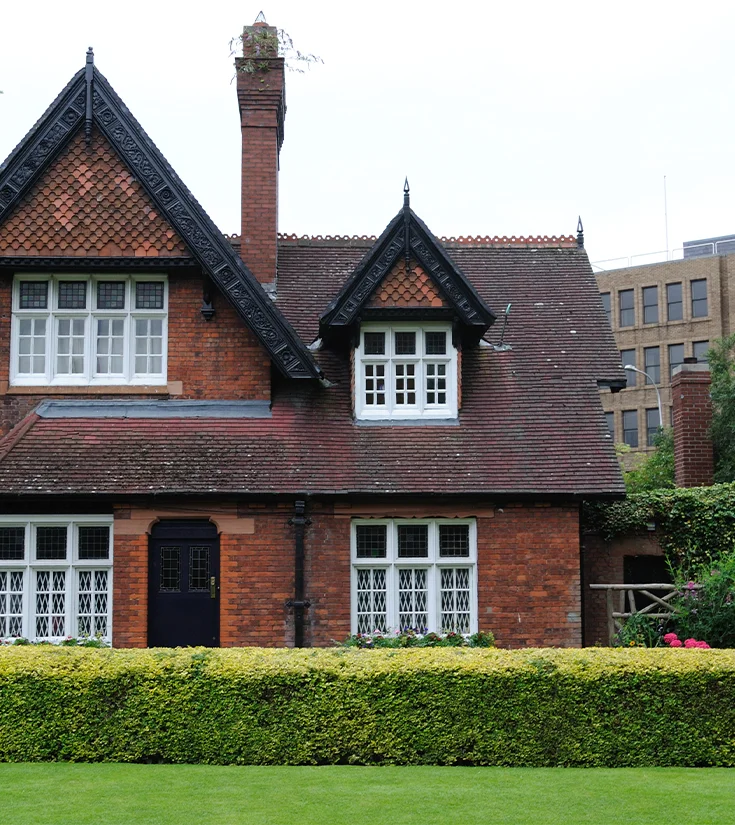
- The property is Victorian, Edwardian, or pre-1920 construction
- There are visible signs of cracking, damp, or structural movement
- The building has been extended, converted, or significantly altered
- You're planning major renovation or structural work after purchase
WHAT THE SURVEY COVERS
What Does a Level 3 Building Survey Inspect?
Structure and fabric: foundations, load-bearing walls, roof structure, floors, and evidence of movement
External elements: roof, chimneys, walls, render, windows, doors, and outbuildings
Internal elements: roof space, ceilings, walls, floors, and signs of damp or timber decay
Alterations and extensions: quality of work, building regulations compliance, and structural implications
Services: visual inspection of electrics, gas, plumbing, and drainage
Legal matters: issues for your solicitor to investigate before exchange
WHY INSTRUCT A LEVEL 3?
Know What You're Buying Before You Exchange
Your solicitor checks the title. Your lender protects its own position. A Level 3 Building Survey is how you find out what the building is actually like before you’re legally committed to buying it.
- Defects identified before exchange, not after completion
- A factual basis to renegotiate price or request remedial works
- Clarity on what specialist investigations are needed before you proceed

Independent. Chartered. Working for You.
independent of lenders and agents, and experienced across London’s period property stock.
- Fully qualified MRICS surveyors — no junior staff
- Independent — we work for you, not the bank or the agent
- 50+ five-star Google reviews
- All London boroughs and nationwide
Once your report is delivered, your surveyor is available to talk you through it. That’s part of the service.
FRICS & MRICS Surveyors
Full membership, not associate level
Red Book valuation standard
Accepted by HMRC, courts and lenders
Professional indemnity insurance
Professional indemnity insurance on every instruction
FREQUENTLY ASKED QUESTION
Questions Buyers Ask About Level 3 Building Surveys
What's the difference between a Level 3 and a Level 2 survey?
A Level 2 Homebuyer Report is a detailed visual inspection that uses a traffic light rating system to show the condition of the property. It covers all accessible areas and is suited to most standard homes in reasonable condition, typically those built after 1900.
A Level 3 Building Survey goes further. It provides a deeper assessment of the structure and overall fabric of the building, with clearer insight into how defects have developed, what has caused them, and what they mean in terms of risk and required action. Repair costs are not included as standard but can be added for an additional fee.
In simple terms, a Level 2 highlights what issues are present. A Level 3 explains what the issues are, why they exist, how serious they are, and what steps should be taken next. For older, altered, or more complex properties, that level of detail is essential.
Is a Level 3 survey worth it for a Victorian or period property?
Yes. A Level 3 Building Survey is the appropriate level of inspection for virtually all Victorian, Georgian, and Edwardian properties, and for any period conversion or property that has been significantly altered.
The reason is specific to how these buildings are constructed and how they age. Solid masonry walls, timber floors, original roof structures, and lime mortar behave very differently from modern construction. They also accumulate history. Previous owners carry out extensions, loft conversions, basement digs, and cosmetic renovations, not always to the required standard. Damp is managed poorly, chimneys are sealed, walls are rendered with materials that trap moisture. None of this shows up on a viewing.
A Level 2 survey is not designed to investigate period construction in sufficient depth. A Level 3 is. For a Victorian property in London, it is rarely the wrong choice.
My surveyor says there's structural movement. How serious is that?
This is one of the most common anxiety-inducing findings in a Level 3 survey, and the answer depends entirely on the nature, extent, and likely cause of the movement.
Some structural movement in older buildings is historic, meaning it happened long ago, has stabilised, and presents no ongoing risk. That is very different from active movement, which is continuing, has a live cause, and may require significant remedial work. A Level 3 survey report should clearly distinguish between the two and advise on whether further specialist investigation, such as a structural engineer’s report, is required before you proceed.
If the report flags structural movement and you’re unsure what it means for your decision, call your surveyor directly. That conversation is part of the service and it’s the most important one to have before you exchange.
The property has been recently renovated. Do I still need a Level 3?
Arguably more so. A recent renovation does not guarantee that underlying problems have been addressed. In many cases, cosmetic work is carried out over defects rather than instead of them. Fresh plaster can hide damp. New decoration can cover cracking. A recently fitted bathroom conceals the condition of the floor structure beneath it.
A Level 3 survey is specifically designed to look beyond presentation. A well-presented property that turns out to have concealed structural issues is not unusual in London. The survey exists precisely to give you a professional assessment of what is actually there, not what it looks like.
What happens after the survey if serious problems are found?
The report will clearly identify any serious defects, explain their likely cause, and recommend what action is required, whether that is specialist investigation, remedial works, or further advice from a structural engineer or specialist contractor.
At that point, your options are:
- Renegotiate the purchase price to reflect the cost of required works
- Ask the seller to carry out specified repairs before exchange
- Instruct further specialist investigations to quantify the cost before committing
- Withdraw from the purchase if the findings fundamentally change your view of the property
Your surveyor can talk you through the implications of specific findings and advise on how to approach any negotiations that follow.
Does a Level 3 survey include a valuation?
How long does a Level 3 survey take?
The on-site inspection usually takes around three to five hours, depending on the size and complexity of the property. Larger or more complex homes may require additional time.
The written report is typically completed and delivered within 5 to 7 working days after the inspection.
Can a Level 3 survey be used to renegotiate on price?
Yes, and this is one of its most practical applications. Where the survey identifies defects requiring remedial work, those findings give you a factual, professionally assessed basis to go back to the seller and renegotiate. You’re not guessing at repair costs or relying on the seller’s word. You have a written report from a RICS regulated chartered surveyor.
Your surveyor can advise on how to frame that conversation with the seller or their agent based on what the report shows.
I've been told the property has subsidence. What should I do?
Don’t proceed without a Level 3 survey, and make sure your surveyor is aware of this before the inspection so they can focus additional attention on it. Subsidence in London is not uncommon, particularly in clay-heavy areas where tree roots and drought cycles affect ground conditions. But not all subsidence is the same.
The survey will assess the visible evidence, establish likely cause and extent, and advise whether the movement is historic and stable or active and ongoing. In many cases, a specialist structural engineer’s report is recommended alongside the survey to give you a full picture before exchange. Your surveyor will tell you if that applies to your property.
Book Your Survey or Valuation Today
Talk to a Chartered Surveyor
Somerset & Sinclair provide RICS Level 3 Building Surveys across all London boroughs and nationwide. If you’re buying an older, altered, or complex property and need a detailed independent assessment from a firm that works solely in your interest, get in touch.