
Commercial Property
Nationwide Commercial Property Valuations
Somerset & Sinclair are RICS chartered surveyors providing commercial valuations and property advice to business owners, investors, landlords, and occupiers across London and nationwide. All instructions are handled by a regulated RICS member. No referral arrangements. No conflicts.

Commercial Property
RICS Commercial Property Services
Commercial property sits at the intersection of property law, finance, and business operations. The decisions that follow — what a property is worth, what condition it needs to be in, what your lease actually requires of you — need to be based on accurate, independent advice from someone who is professionally accountable for it.
We work across offices, retail, industrial, and mixed-use assets. The five services below cover the most common instructions we receive from commercial clients.
Services
Our Commercial Services
We provide RICS Red Book valuations and commercial property services across London and nationwide. From valuations and surveys to rent negotiations and dilapidations, each service is tailored to specific requirements, timelines, and stakeholders. We ensure the right approach from the outset.

Commercial Valuation
Accurate RICS-compliant valuations for commercial properties, supporting sales, acquisitions, and financial reporting.

Commercial Surveys
Detailed property surveys to assess condition, risks, and structural issues before purchase or lease agreements.
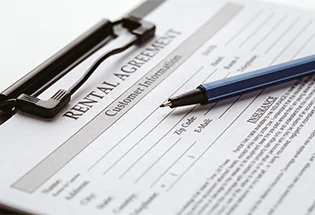
Commercial rent negotiation
Expert support to secure fair rental terms, protecting your interests in lease agreements and rent reviews.

Schedule of Condition
Comprehensive reports documenting a property’s condition at lease start to minimise future disputes.

Schedule of Dilapidation
Clear assessment of repair liabilities at lease end, helping landlords and tenants resolve obligations efficiently.
Book Your Survey or Valuation Today
Contact Us today and get a
"free quote"
Most commercial instructions start with a straightforward conversation. Tell us what you need and we will confirm how we can help.
FAQ
Frequently Asked Questions
Do I need a survey before buying a commercial property?
Yes. A commercial property purchase without an independent survey is a significant financial risk. Unlike residential purchases, there is no standard lender-driven process that triggers a survey automatically. That means it is entirely down to you to instruct one. A commercial survey will assess the structural condition of the building, identify defects, flag maintenance liabilities, and highlight anything that could affect the value or your ability to use the property for its intended purpose. If issues are found, you have a basis to renegotiate the price or require remedial works before completion. Without a survey, you inherit whatever problems the property has the moment contracts are exchanged.
What happens during a commercial rent review?
A commercial rent review is a process set out in your lease that allows the rent to be reassessed at agreed intervals, typically every three to five years. Most upward-only rent review clauses mean the rent can only stay the same or increase, never decrease, regardless of market conditions. The reviewed rent is usually assessed against what a willing tenant would pay for the property on the open market on the review date. Both landlords and tenants are entitled to put forward their own assessment of that figure, supported by comparable market evidence. Where there is a significant gap between the two positions, the matter can be referred to an independent expert or arbitrator. Having a chartered surveyor advise and negotiate on your behalf at this stage can make a material difference to the outcome, particularly where the landlord is represented and you are not.
My landlord has sent me a dilapidation claim. What should I do?
Do not accept or pay the claim without independent advice. Dilapidation claims are frequently overstated. Landlords and their surveyors will often include every possible item of repair, redecoration, and reinstatement in an opening schedule, knowing that many tenants will settle without challenge. Your first step is to appoint a chartered surveyor to review the schedule against your lease obligations, the actual condition of the property at lease end, and, critically, the schedule of condition if one was prepared at the start of the tenancy. Many items in a dilapidation schedule can be challenged, reduced, or removed entirely with the right advice. The landlord also has a duty to mitigate their loss, which means if they are planning to refurbish or redevelop the property anyway, their actual financial loss may be significantly less than the face value of the claim.
What is a RICS Red Book valuation and when do I need one?
A RICS Red Book valuation is a formal assessment of a property’s market value produced in accordance with the RICS Valuation Global Standards, commonly referred to as the Red Book. It is the required standard for any valuation that will be relied upon for financial, legal, or regulatory purposes. You will need one when buying or selling a commercial property where a formal basis of value is required, when securing finance or refinancing against a commercial asset, for company accounts and financial reporting, for Capital Gains Tax or Inheritance Tax calculations, in legal disputes or litigation involving property value, and for certain regulatory requirements. A Red Book valuation carries professional weight because the RICS member who signs it is personally accountable under the RICS regulatory framework. It is not the same as an informal market appraisal or desktop estimate, which carry no such accountability.
What is the difference between a schedule of condition and a schedule of dilapidation?
A schedule of condition is prepared at the start of a lease and records the exact state of the property at that point, supported by photographs. Its purpose is to limit what a tenant can be held responsible for at lease end. If the property already had cracked plaster, a damaged roof, or worn flooring when you took it on, a schedule of condition means you cannot be required to return it in a better state than you found it. A schedule of dilapidation is prepared near or at the end of a lease by the landlord or their surveyor. It sets out the repair, decoration, and reinstatement works the tenant is obliged to carry out under the terms of the lease. The two documents are directly connected. If no schedule of condition was prepared at the start, the tenant’s liability at lease end is much harder to limit. Getting one done at the outset is significantly cheaper than disputing a dilapidation claim several years later.
Will a commercial valuation from Somerset & Sinclair be accepted by my bank or lender?
RICS Red Book valuations produced by a regulated RICS member are the standard format required by banks, commercial mortgage lenders, and other financial institutions for lending decisions. Most lenders will accept a valuation from any regulated RICS firm, though some operate approved or panel surveyor lists. Before instructing us, confirm with your lender whether they have specific panel requirements. If they do, let us know and we will advise whether we are able to satisfy them. Where a lender requires a specific format or additional assumptions in the valuation report, we can accommodate this within the instruction.
How long does a commercial property valuation take?
Timescales depend on the size and complexity of the property and the purpose of the valuation. For a straightforward commercial unit where access is available promptly, an inspection can typically be arranged within a few days and the report delivered within five to ten working days of the inspection. More complex assets, multi-let buildings, or valuations requiring detailed comparable research may take longer. If you have a specific deadline driven by a transaction, refinancing, or legal proceeding, tell us at the outset and we will confirm whether the timescale is achievable. Rushed valuations carry risk, and we will always be straightforward about what is realistic.
Do you carry out commercial property valuations outside London?
Yes. While we are based in Covent Garden and carry out a significant volume of work across London, we also operate nationally. If you have a commercial property outside London that requires a valuation, survey, or lease advice, contact us with the location and asset type and we will confirm whether we can assist and on what basis.